
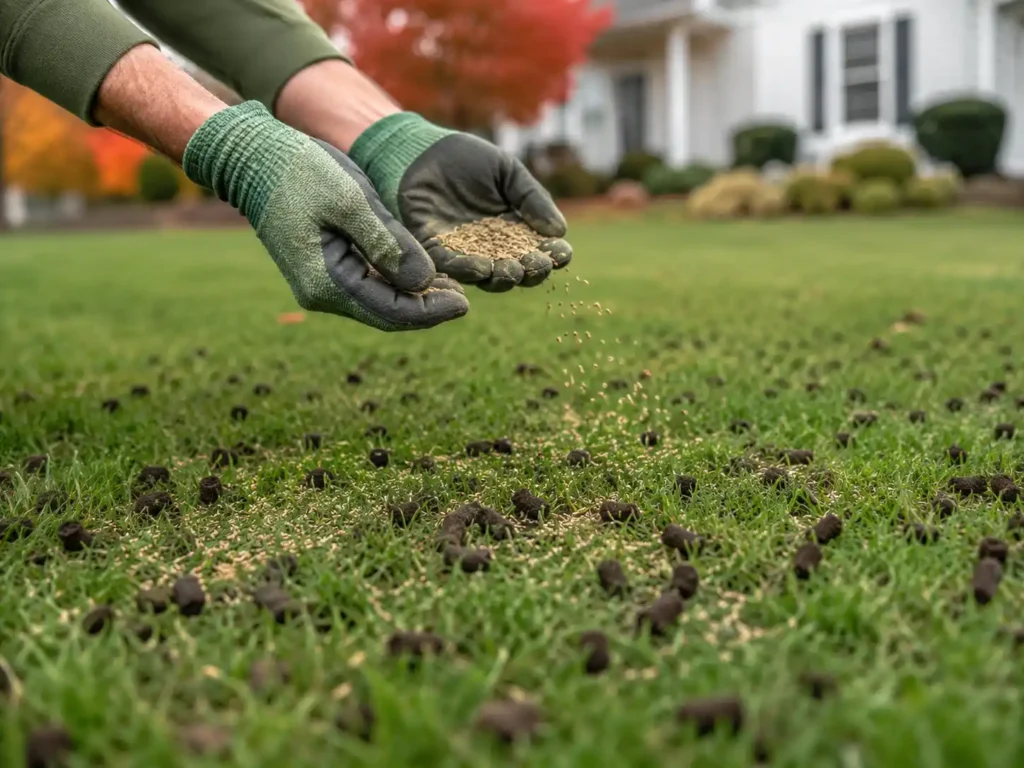
FortSmith Landscaping is a Wake Forest lawn care company that uses local timing, turf type, and soil conditions to plan fall aeration and overseeding. For cool-season tall fescue lawns in Wake Forest, the best fall 2026 window is generally September 1 through October 1, giving new grass time to establish before winter.
Fall is the main recovery season for fescue in central North Carolina. Summer heat, dry stretches, foot traffic, pets, and compacted soil can leave a lawn thin by August. Core aeration opens the soil, while overseeding puts new turf-type tall fescue seed into areas where the existing lawn has thinned.
When Should You Aerate and Overseed a Wake Forest Lawn in Fall 2026?
For most tall fescue lawns in Wake Forest and the surrounding Piedmont area, early September through early October is the target period for lawn aeration and overseeding. NC State Extension identifies September 1 through October 1 as the renovation window for Piedmont tall fescue and recommends about 6 pounds of seed per 1,000 square feet. Seeding later raises the risk that young plants will not develop enough before colder weather arrives.
Relieves Compacted Soil
Core aeration removes small plugs of soil and creates openings through compacted ground. This is useful in the Wake Forest area because lawns have dense clay soil or areas that receive regular foot traffic. Loosening the upper soil gives turf roots more room to grow and makes it easier for air, water, and nutrients to reach the root zone.
Improves Seed-to-Soil Contact
Grass seed performs best when it reaches the soil directly rather than just sitting on top of existing turf. Lawn aeration creates thousands of small openings across the lawn, giving new grass seed more places to settle for germination. This helps grass grow more evenly across the lawn.
Fills Bare and Thinning Areas
Tall fescue is a bunch-type grass, so it does not spread across bare areas as well as some warm-season grasses do. Once a section of a fescue lawn thins out, overseeding will rebuild its density. Adding new seed in fall helps fill the areas affected by summer heat, drought stress, foot traffic, disease, or everyday wear.
Encourages Stronger Root Development
Early fall gives newly planted cool-season grass seeds time to develop roots while soil temperatures remain stable and daytime heat begins to ease. A better-developed root system can help the lawn handle changing temperatures and moisture conditions as it moves into winter and then resumes stronger growth in spring.
Creates a Thicker Lawn Going Into Winter
A lawn with fewer open spaces has a better chance of maintaining a fuller appearance through the cool season. Thicker turf can also leave less exposed soil where weeds may eventually gain a foothold. The goal is not simply to add more grass seed, but to establish healthy new plants where the existing turf has lost density.
Helps Water Reach the Root Zone
Compacted soil can cause irrigation or rainfall to sit near the surface or run off before it reaches deeper roots. The holes created during core aeration give water additional pathways into the soil. For lawns with clay-heavy soil that is common to the Triangle area, that can be especially helpful when paired with proper watering and good drainage.
What Grass Seed Works Best for Cool Season Lawns?
Tall fescue is one of the primary cool-season grasses used in North Carolina’s Piedmont. Because it grows in bunches rather than spreading aggressively, thin spots often stay thin unless new seed is introduced.
In its guide to tall fescue lawn maintenance, NC State Extension recommends using a blend of tall fescue cultivars rather than relying on a single variety. Using a blend can give the lawn a broader base and improve its ability to handle differences in heat, shade, drought, and disease pressure.
How Could the 2026-27 Winter Forecast Affect Lawn Preparation?
NOAA’s August 2026 seasonal outlook reports that El Niño is strengthening, with a greater than 90% chance of becoming a very strong event during fall and winter 2026-27. For Wake Forest lawns, that makes fall preparation especially focused on getting new grass established before winter and making sure the soil can handle periods of increased moisture.
Homeowners should pay particular attention to:
- Early fall establishment: Overseeding within the recommended fall window gives new fescue more time to develop roots before colder weather.
- Soil compaction: Aeration can improve water movement through dense Piedmont soils before wetter winter conditions arrive.
- Drainage problems: Low areas or compacted sections may stay saturated longer during repeated periods of rain.
- Watering after seeding: New seed still needs consistent moisture, but irrigation should be adjusted when rainfall is already keeping the soil damp.
- Leaf and debris removal: Keeping newly seeded areas clear with fall leaf removal ensures leaves are not blocking light and holding excess moisture against young turf.
The North Carolina State Climate Office notes that El Niño winters tend to be wetter than normal in North Carolina because a stronger subtropical jet stream can carry moisture and storm systems across the state. That does not guarantee an unusually wet winter in Wake Forest, but it gives homeowners another reason to address compaction, drainage, and thin turf during the fall rather than waiting until spring.
Fall Aeration and Overseeding FAQs
When should I aerate and overseed my lawn in Wake Forest, NC?
Local lawns with tall fescue should be aerated and overseeded from early September through early October. At FortSmith Landscaping, we provide lawn aeration and overseeding as part of our Wake Forest lawn care services.
Is September too early to overseed fescue in North Carolina?
September is not too early to overseed fescue in the Piedmont. It is the preferred period because temperatures are beginning to moderate while seedlings still have time to develop before winter.
Why aerate a lawn before overseeding it?
Aerating before overseeding loosens compacted soil and creates openings that help water, air, and grass seed reach the root zone.
How often should I water after overseeding?
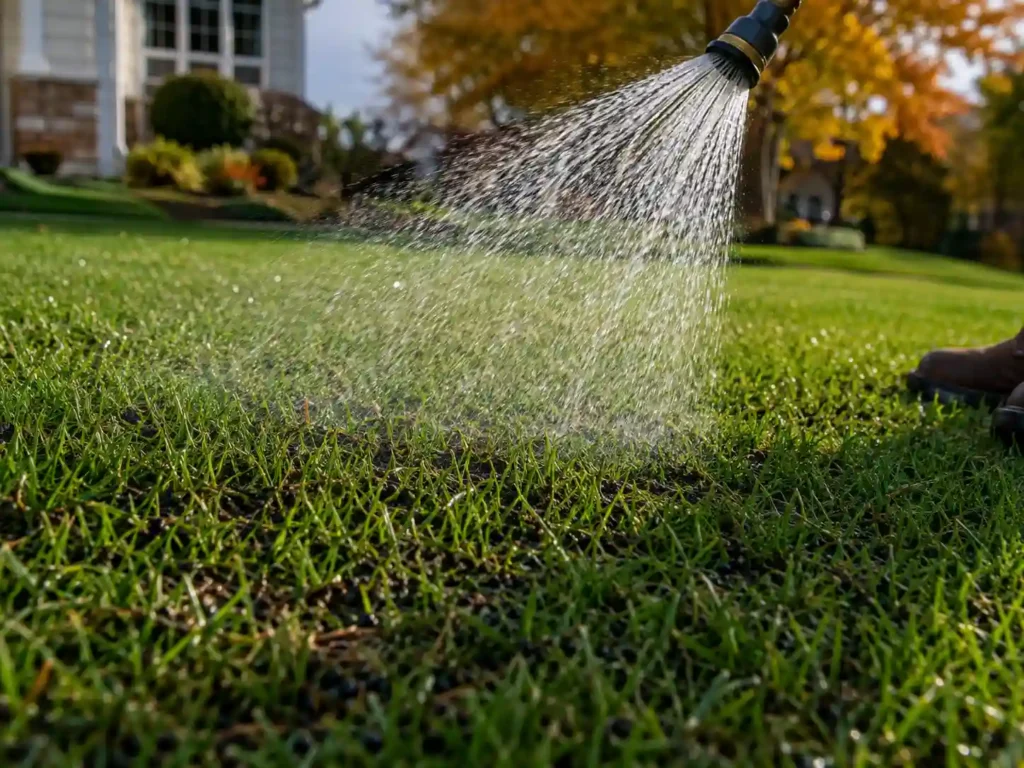
Watering your lawn after overseeding should be frequent enough at first to keep the seedbed consistently moist without saturating the soil. As seedlings establish, watering can become less frequent and deeper.
What fall and winter lawn care services does FortSmith Landscaping offer?
FortSmith Landscaping provides fall cleanup, leaf removal, lawn fertilization, lawn mowing, trimming, edging, aeration, and overseeding for Wake Forest-area properties. Seasonal care can also include mulch or pine straw refreshes, hedge trimming, debris removal, and other lawn or landscape maintenance based on the condition of the property.
Request a Free Estimate on Lawn Aeration Today
If your fescue lawn came out of summer with thin areas, compacted soil, or bare patches, late August is the time to plan. FortSmith Landscaping can evaluate your lawn, schedule aeration and overseeding for the local fall window, and coordinate follow-up care for properties in Wake Forest, Rolesville, North Raleigh, and nearby communities.
Request a FREE estimate today by calling [phone] or filling out our contact form to get started.